Foundations in Occupational Therapy Practice for Adult ADHD:
A Neurodiversity-Affirming and Skills-based Approach
This beginner-level CPD-accredited online workshop is ideal for occupational therapists and mental health clinicians who wish to gain foundational knowledge in adult ADHD, neurodiversity, assessment strategies, supporting physiological needs, teaching executive functioning skills, and providing school/work accommodations to facilitate the occupational participation of adults with ADHD.
LEVEL UP YOUR KNOWLEDGE AND EXPERTISE
The Gap in Your Training
Occupational therapists are increasingly called upon to support adults with ADHD. As awareness of ADHD in adulthood grows, many individuals are now seeking diagnosis and support, often after years of misdiagnosis or misunderstanding. With adult ADHD affecting approximately 3–5% of the population, there's a critical need for neurodiversity-affirming, evidence-based occupational therapy approaches tailored to this unique population.
Without specialised training, clinicians miss opportunities to support clients navigating work, relationships, and daily functioning. This course bridges that gap with practical, evidence-based approaches tailored to adult neurodivergent clients.
Grounded in current ADHD research and inclusive models of care, the workshop promotes a strengths-based, justice-oriented perspective on adult ADHD intervention.
This online workshop will provide occupational therapists with the foundational knowledge and practical tools needed to work effectively with adults with ADHD.
The Workshop is accredited for 15 CPD points (including 1 ethics).
Accreditation number: AOCP004-MD981-0038-2-2026
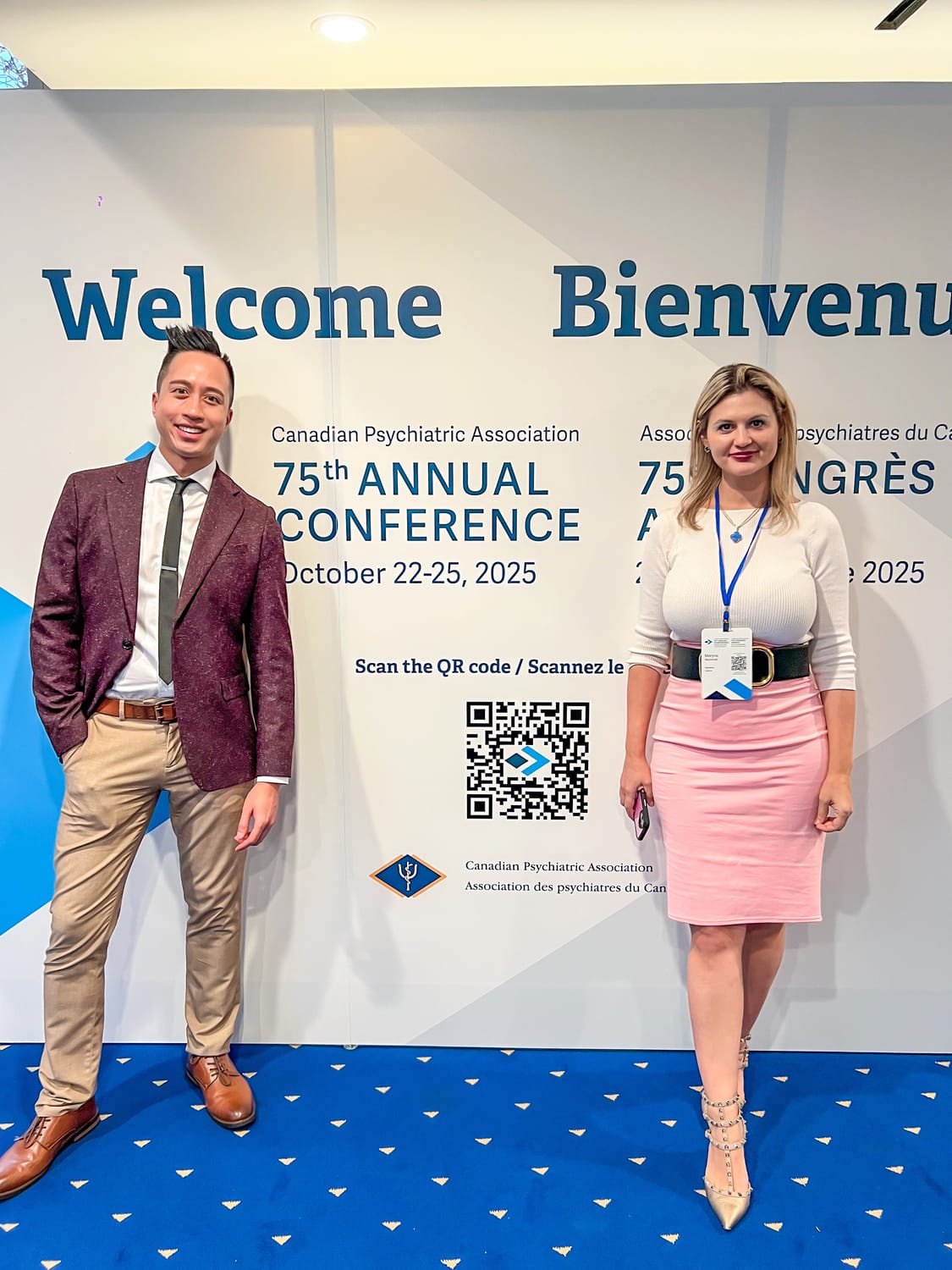
Course Instructors:
Adam Ly, MScOT, OT Reg. (Ont.), Registered Occupational Therapist, Practising Psychotherapy
Dr. Maryna Mammoliti, MD, Psychiatry
KEY LEARNING OBJECTIVES
What you will learn:
Identify the limitations of the DSM-5-TR (APA, 2022) in the ADHD diagnostic process for adults and understand its relevance to occupational therapy
Explore occupational therapy models and neurobiological theories of ADHD to support you to align your occupational therapy practice with adults with ADHD
Describe the clinical presentation of ADHD in adults, including occupational performance challenges, co-occurring conditions, and individual strengths
Apply neurodiversity-affirming principles to support occupational justice and inclusive practice
Utilise relevant assessment strategies to uncover occupational participation barriers
Understand how to implement executive functioning skills training, physiological supports, and sensory management strategies to support adults with ADHD in daily life
Recommend reasonable accommodations in work and higher education settings for ADHD adults
Workshop Format
This workshop was originally presented as a hybrid live and self-paced interactive online format, using a combination of lecture, discussion, learning, and occupation-based inquiry.
The recording of the live interactive lectures have been uploaded into the learning portal, and the workshop will now be offered as an on-demand self-paced course only.
MODULE ONE: INTRODUCTORY MATERIAL

Lesson 1: Introduction to ADHD
Describe how ADHD clinically presents in adults
Define the diagnostic criteria in the DSM-5-Text Revision and its limitations
Describe how ADHD co-occurs with other medical conditions
Lesson 2: The Neurobiology of ADHD
Describe the Dopamine Hypothesis, how it relates to stimulant medication, and other neurobiological factors
Understand the theories of ADHD
Lesson 3: Overview of medications
Identify common medications used to help with ADHD
Understand the mechanisms, side effects, and limitations of medications for ADHD
Lesson 4: The Role of Occupational Therapy and Occupational Participation
Identify the common occupational participation challenges experienced by adults with ADHD.
Describe the support possibilities and role of occupational therapy.
Lesson 5: Introduction to Neurodiversity
Define and differentiate between common terminology in the neurodiversity lexicon.
Understand and replace medical terminology with neurodiversity-affirming terms in occupational therapy communication and documentation.
Describe ADHD masking and its impact on a client’s health, behaviours, thoughts, and emotions.
Identify the common strengths associated with ADHD.
MODULES 2: LIVE WORKSHOP RECORDINGS
Lesson 1: Neurodiversity-Affirming Practice and Occupational Justice
Critically reflect on what is “normal” and how context can impact the way clinicians view behaviours
Apply neurodiversity-practice principles in clinical practice and documentation through a small group activity
Understand the ethical and moral need for occupational therapy to align with neurodiversity-affirming approaches and how this can be achieved
Reflect on reflexive questions when approaching client’s problems
Identify strategies to promote occupational justice for neurodivergent clients
Lesson 2: Assessment Strategies, Developing a Support Plan, Attention, and Working Memory
Identify psychosocial questionnaires that can be used to assess the difficulties associated with ADHD
Review a semi-structured interview guide to assess ADHD functioning systematically
Identify standardized cognitive assessments to measure executive functioning objectively
Analyze assessment results and connect it models of practice to determine occupational participation priorities
Describe how SMART Goal Setting can help anchor an occupational therapy program and considerations when adapting it to clients who do not respond well to the SMART format
Develop a potential support plan and apply clinical reasoning skills using theory and the conceptual models to a case study (small groups).
Lesson 3: Executive Functioning Strategies
Understand the common challenges for ADHD with executive functioning difficulties
Describe support strategies for prioritization, planning, organizing, task initiation, decision-making, and time management.
Lesson 4: Executive Functioning Strategies
Describe support strategies for diet, exercise, and sensory needs
Describe the process of assessing and requesting school or work accommodations
Identify common school and work accommodations that support ADHD difficulties
Explore clinical considerations when recommending accommodations for optimal success
MEET YOUR INSTRUCTORS
Who are the instructors and what qualifies them to do this training?

Adam Ly, OT Reg. (Ont.), is an occupational therapist practising in Ontario, Canada. He focuses on helping adults who experience mild-moderate cognitive impairments, mental health, and return to work due to various conditions including mild traumatic brain injury, mood disorders, attention deficit hyperactivity disorder (ADHD), and late diagnosis autism. He is an adjunct clinical professor and lecturer at Western University and the University of Toronto in the schools of occupational therapy, a preceptor, a workshop presenter through the Canadian Association of Occupational Therapists, and a trainer/mentor at CBI Health. He has published in practice journals and presented at international conferences. He is a member of Neurodivergent Insights, a neurodiversity-affirming clinician support group. He has completed supervision at The Beck Institute in Cognitive Behavioural Therapy and is a Certified Multi-Context approach clinician by Dr. Joan Toglia. His publications can be found here (https://www.researchgate.net/profile/Adam-Ly-3). Connect with him on LinkedIn: https://ca.linkedin.com/in/adamly

Dr. Maryna Mammoliti (she/her) is a psychiatrist who splits her time Ontario and Alberta practicing comprehensive psychiatry (diagnosis, advocacy, therapy) with focus on psychotherapy, physician health, ADHD, developmental trauma and PTSD, as well as ER psychiatry at the Centre for Addiction and Mental Health (CAMH). She has completed her medical school training at University of Ottawa, followed by her 5-year Psychiatry residency at Western University. She was a former Psychiatry Section Chair at Ontario Medical Association (OMA). She currently holds an Adjunct Professor position at Western University, supervising residents and medical students for their psychiatry rotations. She has provided presentations on physician health and has co-presented on adult ADHD at the American Psychiatric Association (APA) and Children and Adults with Attention-Deficit/Hyperactivity Disorder (CHADD). She also has two co-published articles in the Canadian Journal of Physician Leadership (CJPL), one of which addresses ADHD in physicians.
Investment Details


HPCSA Accreditation
14 Clinical, 1 Ethics CPD
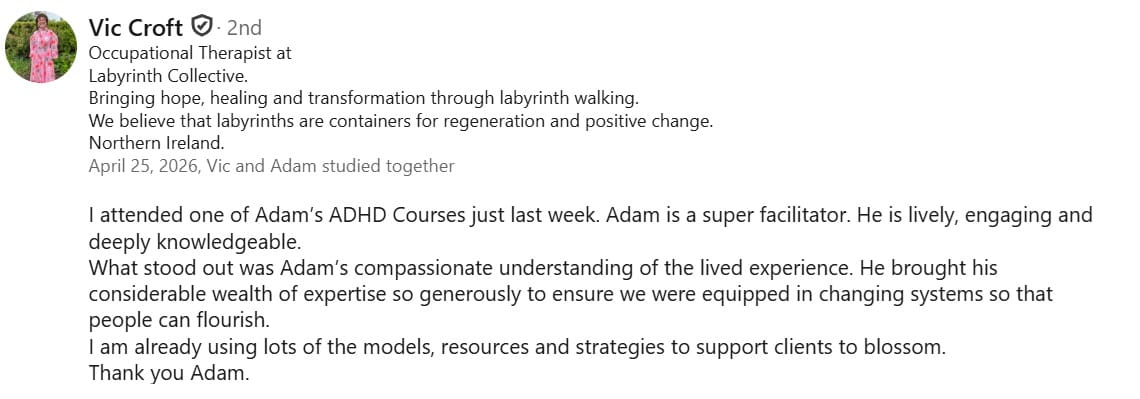
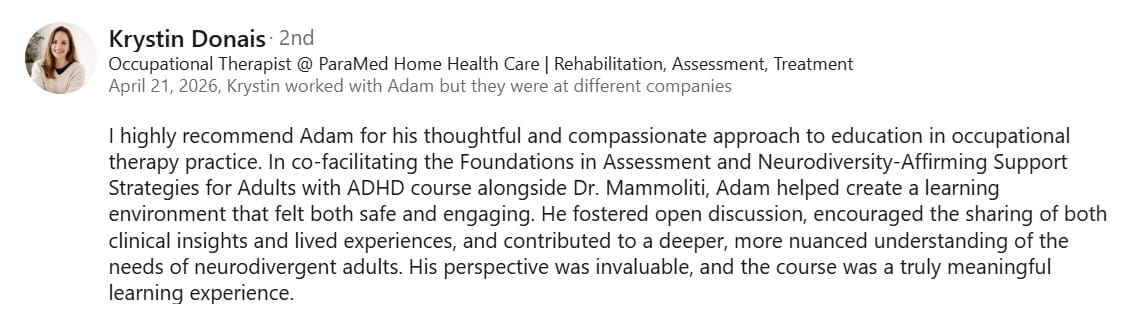
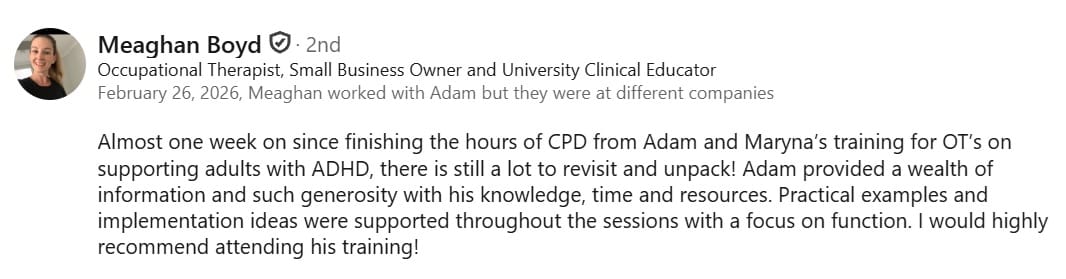
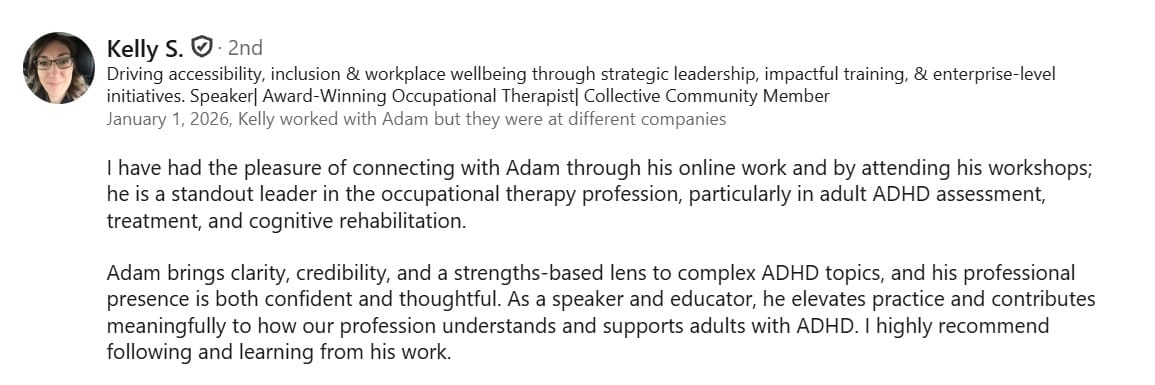
Hear from past participants
Why should you attend this workshop?
Gain knowledge and strategies to respond to the growing need for adult ADHD support in occupational therapy
Build competence in using neurodiversity-affirming, strengths-based frameworks
Gain confidence in applying practical, evidence-informed tools in your practice
Why should you attend this workshop?
This workshop is designed for:
Occupational therapists working with or interested in working with adults with ADHD
OTs seeking to transition their practice from paediatric to adult populations
Occupational therapists supporting adults in educational, vocational, or community settings
This workshop will provide occupational therapists with a strong foundation in theory, assessment, and practical intervention strategies for supporting adults with ADHD
This workshop will provide occupational therapists with a strong foundation in theory, assessment, and practical intervention strategies for supporting adults with ADHD.
Additional recommended text RECOMMENDED TEXT AND RESOURCES - OPTIONAL)
Books:
1. Barkley, R. A. (Ed.). (2015). Attention-deficit hyperactivity disorder: A handbook for diagnosis and treatment (4th ed.). Guilford Press.
Clinical Tools (listed for consideration when you enter practice):
1. Various clinical tools for assessment and treatment in the Multi-Context Approach by Dr. Joan Toglia can be found on her website: https://multicontext.net/.
2. https://neurodivergentinsights.com/ - A website by Dr. Megan Neff with blog posts and workbooks for purchase on various areas.
3. https://www.youtube.com/c/HowtoADHD - A well-respected Youtuber named Jessica McCabe with lived experience, who shares educational videos on ADHD and strategies.
Don't miss out on our exclusive early bird offer. Enroll now for a huge saving of 30% off!